Laser Cladding
What is Laser Cladding?
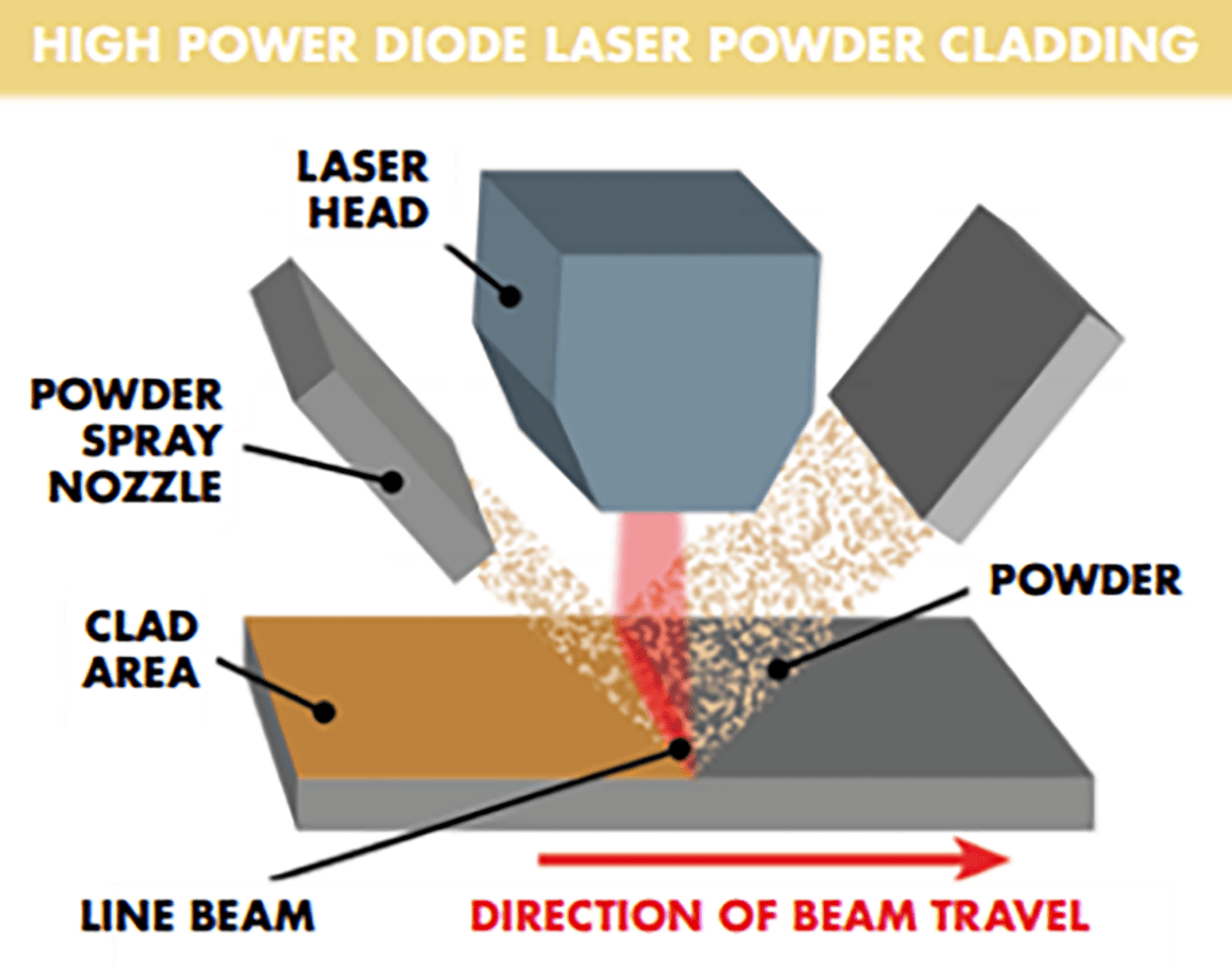
Laser cladding is a surface engineering process that uses a high-powered energy source to melt an additive stock material and fuse it to a substrate, transferring the advantageous properties of the additive material to the surface. Because the laser energy is highly concentrated, the process produces a full metallurgical bond while avoiding the drawbacks of typical welding processes, minimising heat affected zone (HAZ), dilution, and distortion.
What is laser cladding used for?
Laser cladding is used to apply a wear-resistant or protective additive material to the surface of a component, creating a full metallurgical bond while minimising heat affected zone, dilution, and distortion compared to traditional welding.
What size components can Avweld's laser cladding system handle?
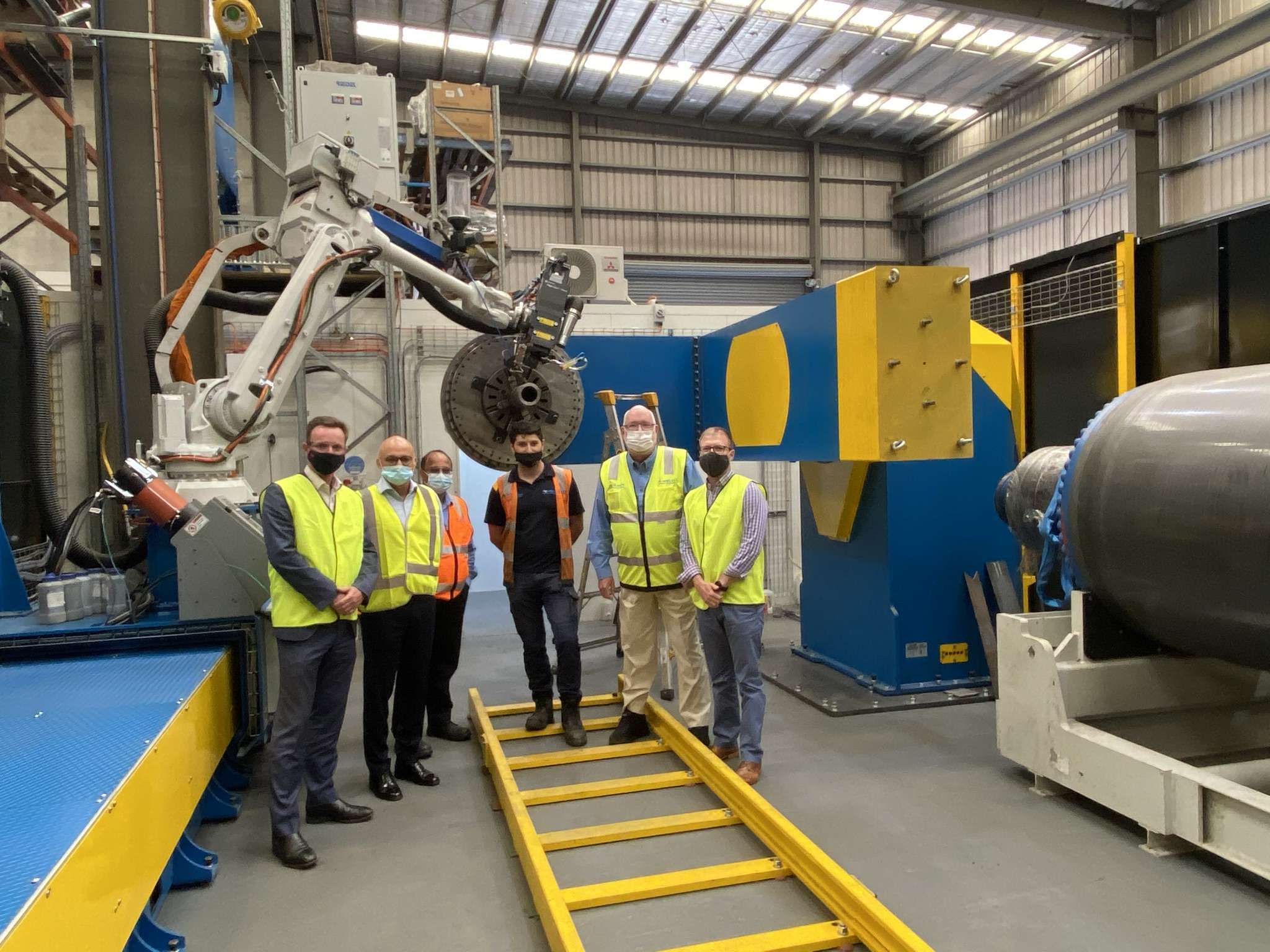
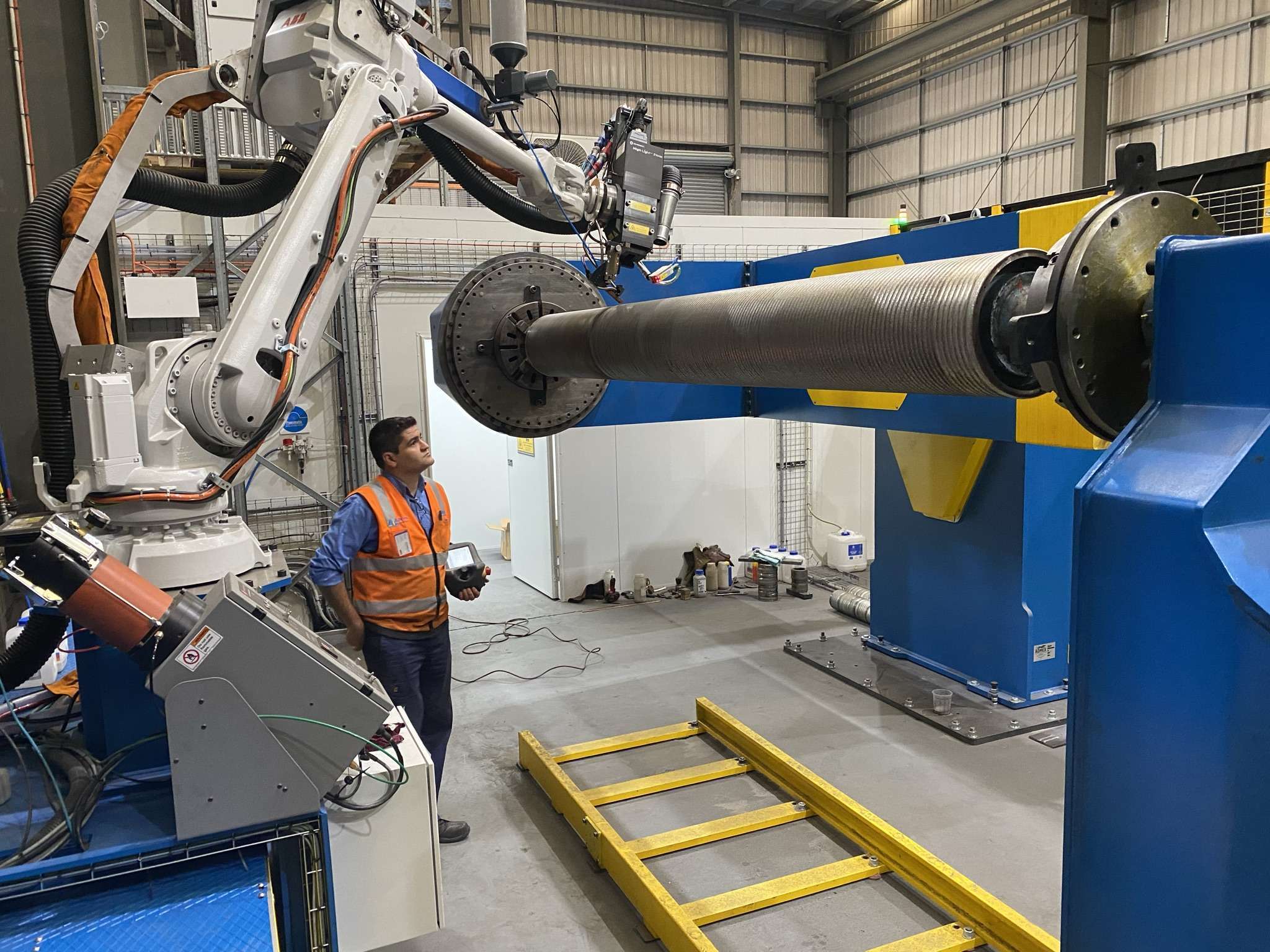
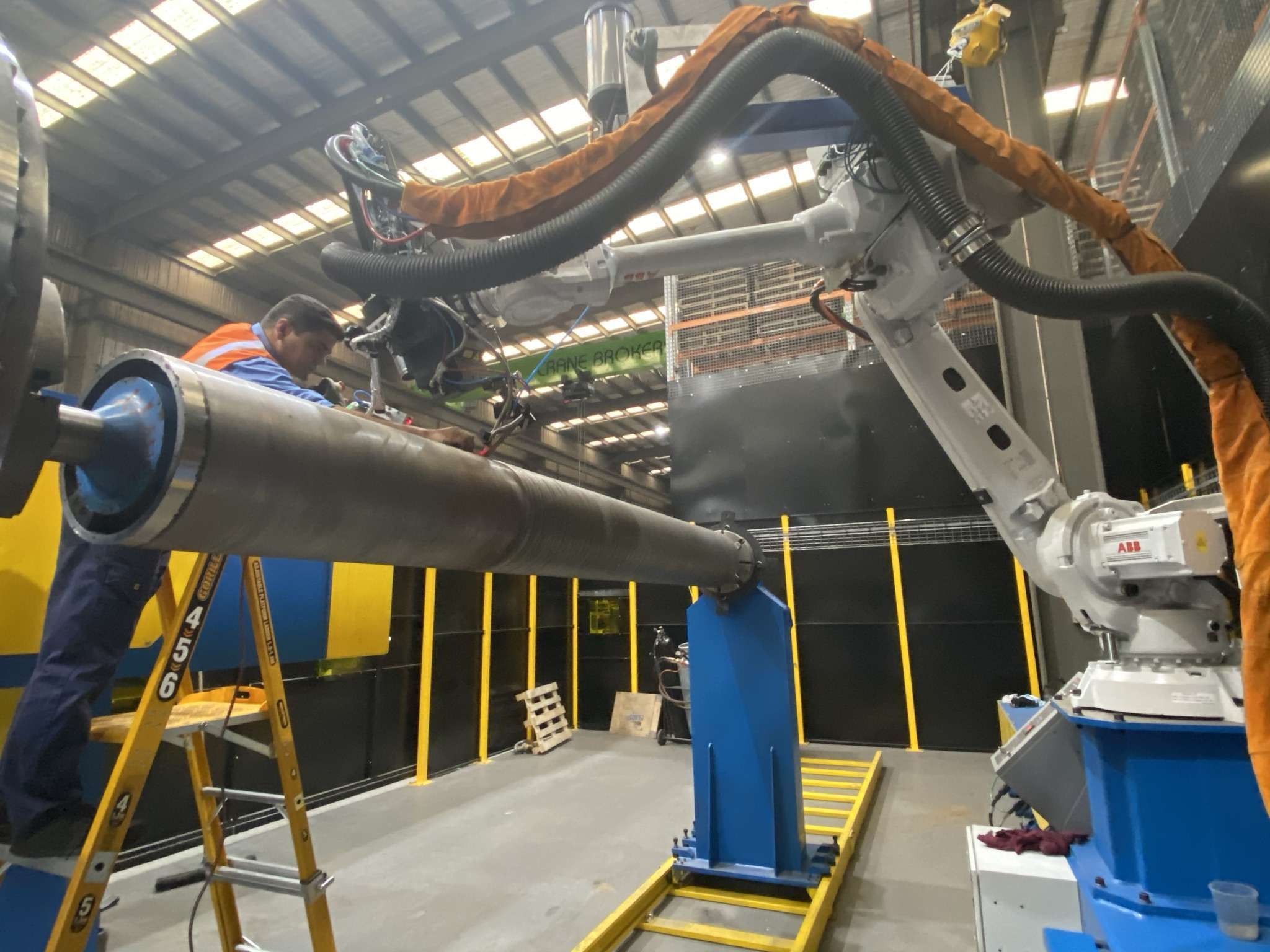
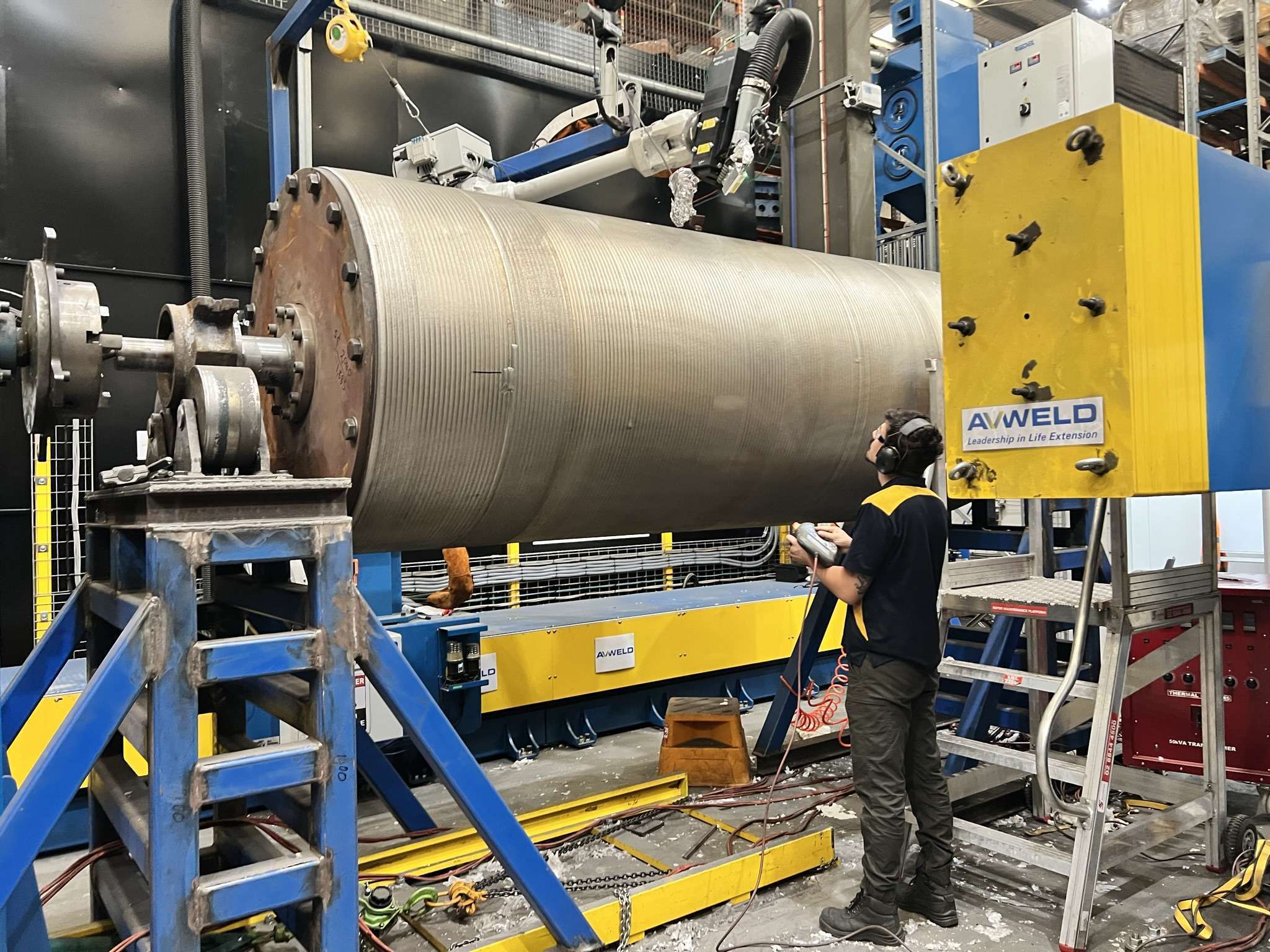
Avweld's robotic laser cladding cell, built around a 10kW Coherent direct diode D-series laser, can weld components up to 30 tonnes, up to 3 metres in diameter and 10 metres long.
Can laser cladding be used on small or precision parts?
Yes — Avweld operates two additional laser cladding cells using smaller fibre lasers, specifically suited to cladding smaller, precision parts such as internal diameters, small shafts, and edges.
When did Avweld commission its laser cladding system?
Avweld commissioned its original robotic laser cladding system in late 2020, and has since added two further cells using fibre laser technology.
Why Laser Cladding Outperforms Traditional Welding
- Full metallurgical bond — the additive material fuses genuinely to the substrate rather than simply sitting on top of it, ensuring long-term adhesion and performance
- Minimal heat affected zone (HAZ) — the concentrated laser energy limits the area of the base material affected by heat, reducing the risk of weakening the surrounding substrate
- Reduced dilution — less mixing between the additive and base material means the cladding retains more of its intended wear-resistant or protective properties
- Reduced distortion — the precision and control of laser energy minimises the warping and distortion common with conventional welding processes on large or precision components
Avweld's Laser Cladding Capability
Avweld operates a robotic laser cladding system commissioned in late 2020, built around a Coherent 10kW direct diode D-series laser unit — the latest and most powerful laser cladding system of its type in Australia. The robotic cell is capable of welding components up to 30 tonnes, up to 3 metres in diameter and 10 metres long.
Since commissioning the original system, Avweld has added two further laser cladding cells utilising smaller fibre lasers, purpose-suited to cladding smaller, precision parts such as internal diameters, small shafts, and edges.
Applications
Laser cladding is suited to:
- Large, heavy components requiring precision hardfacing without excessive heat distortion
- Smaller, precision parts including internal diameters, small shafts, and edges
- Applications where a genuine metallurgical bond is required rather than a mechanically applied coating
- Components where minimising heat affected zone is critical to preserving base material properties
| HVOF | PTA | Laser Cladding | |
|---|---|---|---|
| Heat Source | Gas Flame | Plasma/Electric Arc | Laser Beam |
| Coating Thickness | 0.05–0.5mm | 0.5–5mm | 0.1–10mm |
| Deposition Rates | 1–9 kg/h | 1–5kg/h | up to 30kg/h |
| Dilution | 0% | 5–15% | 1–5% |
| Bond Type | Mechanical | Metallurgical | Metallurgical |
| Bond Strength | < 80MPa | < 800MPa | < 800MPa |
| Heat Input | Low | High | Medium |
| Porosity | >5% | 100% dense | 100% dense |
-
10KW Coherent D-SeriesIdeal for large jobs
-
3KW Fibre LaserPrecise control for accuracy
-
2KW PortableFor use in-situ and bore cladding
| Metallurgical Bond | Metallurgical bond vs. mechanical bond |
| Low Dilution | 1–5% typical (~1/3 dilution of PTA process) |
| Controllable Process | Highly controllable, repeatable and efficient |
| Smooth Clad | Less post machining required |
| Small Heat Zone | Removes need for post weld heat treatment or stress relief |
| High Quench Rates | Finer grain structure = higher corrosion potentials |
| High Deposit Speed | Faster than thermal spray or PTA |
| High Efficiency | Deposit efficiency >80% |
- Shafts, struts, journals
- Cylinders, rods, rams
- Rollers
- Crusher components
- Drilling and ground-engaging tools
- Wheels, tracks
- Buckets, teeth
- Pipes, chutes, ducts
- Screws, augers
- Wind turbine components
- Boiler tubes
- Cutting blades, knives
- Mulcher and chipper components
- Pump components (sleeves, shafts, impellers, wear rings)
- Valves (stems, discs, seats, balls)
- Gearboxes
- Rotary valves and rotary feeders
- Vacuum pumps
Laser Heat Treatment
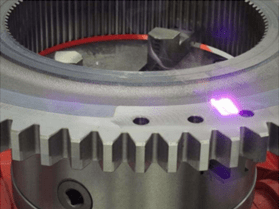
Using the same equipment required for laser cladding, by removing the feed stock material, we are able to heat treat surfaces with high efficiency and speed.
| Precision Control of Heat | Only heat treat desired surfaces |
| Minimal Post-Processing | Low distortion – limited post-machining |
| Self-Quenched Process | Simple and highly repeatable |
| Improved Access & Flexibility | Line of sight process – easy part changeover via software |
| Improved Process Control | Simple, non-contact process – supports use of optical pyrometer to control the heating |
| Material | Maximum Hardness (Rc) | Max Depth (mm) |
|---|---|---|
| Carbon Steels | ||
| 1080 | 68 | 2 |
| 1075 | 68 | 2 |
| 1045 | 60 | 1.5 |
| 1030 | 50 | 0.75 |
| 1018 | 30 | 0.25 |
| Heat Treatable Alloys | ||
| 4140 | 68 | 2 |
| 4340 | 68 | 2 |
| Heat Treatable Stainless Steel | ||
| 420 | 65 | 1.5 |
| 410 | 50 | 0.5 |
| Cast Irons | ||
| Gray | 65 | 1 |
| Ductile | 55 | 0.75 |
Laser Heat Treatable Materials Carbon & Alloy Steels
(> 0.3% carbon recommended)
- AISI 1030, 1045, 1060, 1075, 1080, 4140, 4340
- Ductile & Grey Cast Iron
- Martensitic Stainless Steels (AISI 410, 420, 440)
Notes:
- Max depth & max hardness for some materials do not coincide
- Actual results are dependent on carbon content and part geometry
- Results are based on direct diode laser system results.