
Thermal Spray
Thermal Spray Coating Services
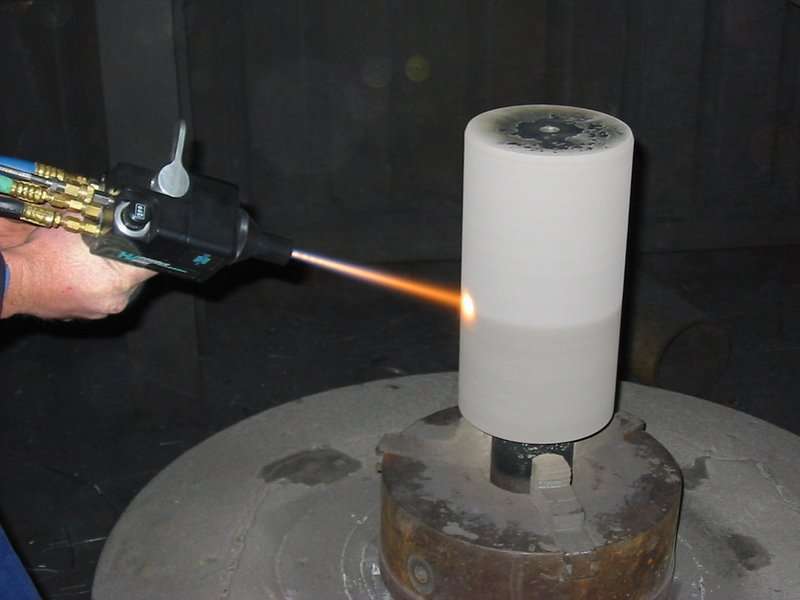
Thermal spraying is a family of coating processes in which melted or heated materials are sprayed onto a surface to form a protective coating. The coating precursor is heated by electrical means (plasma or arc) or chemical means (combustion flame), then propelled onto the substrate to build up a durable protective layer.
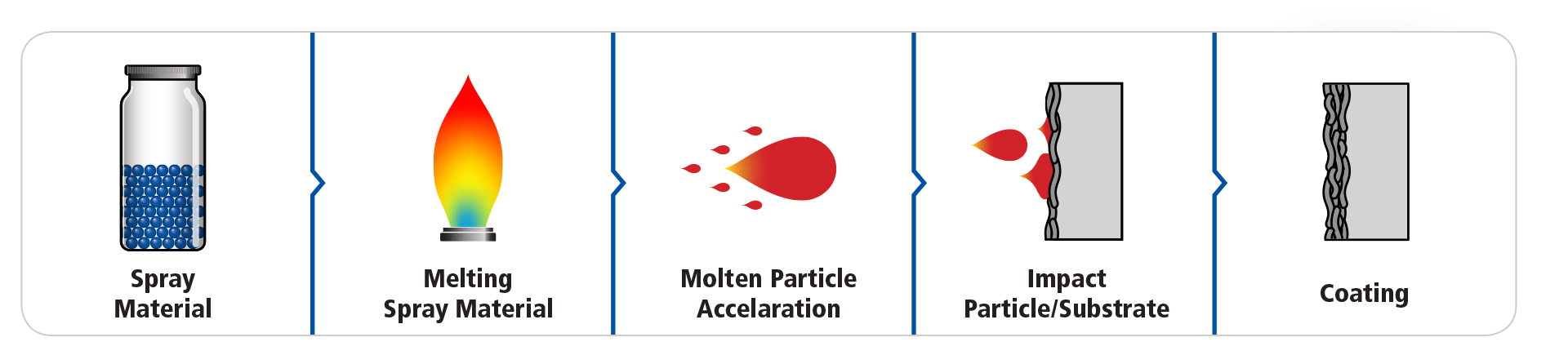
Thermal spraying can provide thick coatings — approximately 20 microns to several millimetres, depending on the process and coating — over a large area at a high deposition rate, compared to other coating processes such as electroplating, physical vapor deposition, and chemical vapor deposition.
Electroplating, Physical and Chemical Vapor Deposition
Coating materials available for thermal spraying include metals, alloys, ceramics, plastics, and composites. These are fed in powder or wire form, heated to a molten or semi-molten state, and accelerated toward the substrate as micrometer-size particles. Combustion or electrical arc discharge is typically used as the energy source, with resulting coatings built up from the accumulation of numerous sprayed particles. Because the substrate surface may not heat up significantly during the process, it's possible to coat flammable substances safely.
Coating quality is usually assessed by measuring porosity, oxide content, macro and micro-hardness, bond strength, and surface roughness. Generally, coating quality increases with increasing particle velocities.
| HVOF – High Velocity Oxygen Fuel | Versatile wear resistant deposits |
| TWAS – Twin-Wire Arc Spray | Dimensional restoration, on-site spraying |
| DCPS – DC-Plasma Spray | High melting temperature ceramic coatings |
| Blasting | Full sand, grit, and glass blasting facilities in-house |
What is thermal spraying?
Thermal spraying is a coating process in which melted or heated materials are sprayed onto a surface, with the coating precursor heated by electrical (plasma or arc) or chemical (combustion flame) means before being propelled onto the substrate.
How thick can thermal spray coatings be applied?
Thermal spray coatings typically range from approximately 20 microns to several millimetres in thickness, depending on the process and coating material used.
How does thermal spraying compare to electroplating or vapor deposition?
Thermal spraying can provide thick coatings over a large area at a high deposition rate compared to processes such as electroplating, physical vapor deposition, and chemical vapor deposition.
What materials can be applied using thermal spraying?
Thermal spray coating materials include metals, alloys, ceramics, plastics, and composites, fed in powder or wire form and heated to a molten or semi-molten state before application.
What's the difference between HVOF, TWAS, and DCPS thermal spray processes?
HVOF (High Velocity Oxygen Fuel) is used for versatile wear resistant deposits, TWAS (Twin-Wire Arc Spray) is suited to dimensional restoration and on-site spraying, and DCPS (DC-Plasma Spray) is used for high melting temperature ceramic coatings.
Can thermal spraying coat flammable substances safely?
Yes — because the substrate surface may not heat up significantly during the thermal spraying process, it's possible to coat flammable substances.
Avweld provide the following variations of thermal spraying:
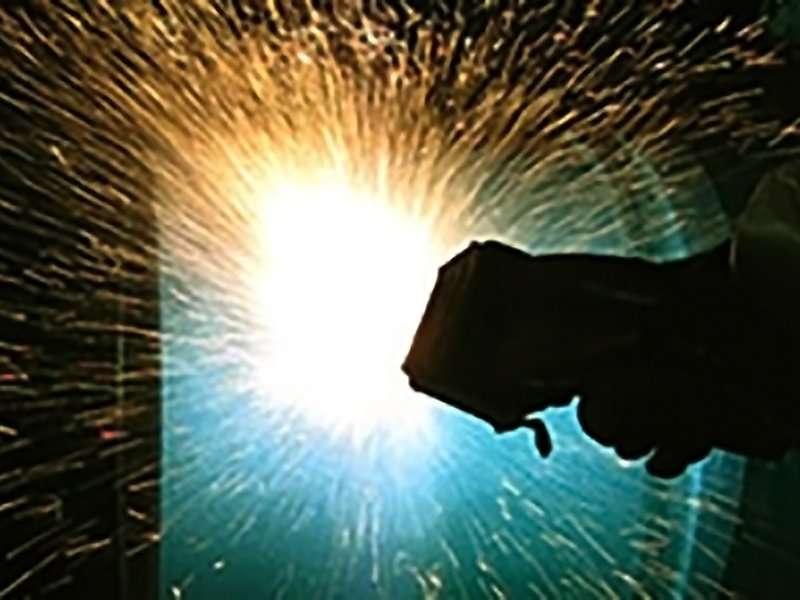
ARC SPRAYING
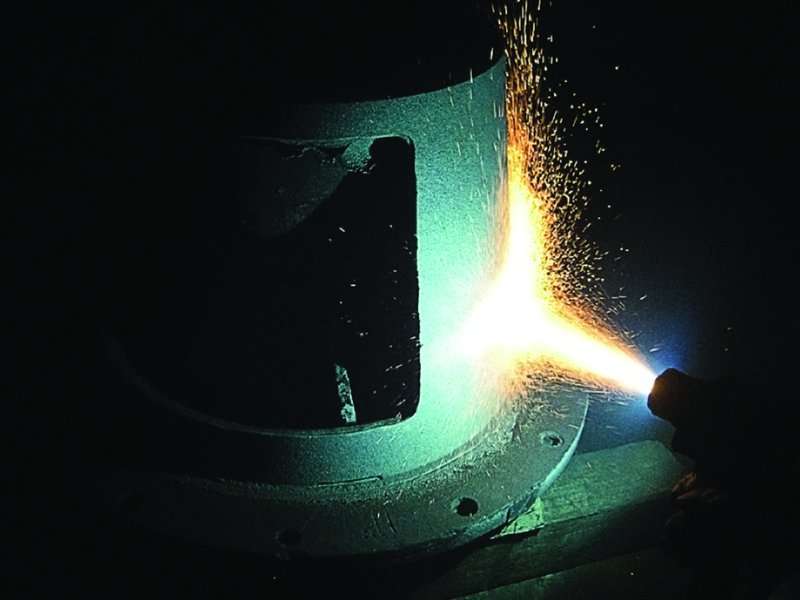
PLASMA SPRAYING
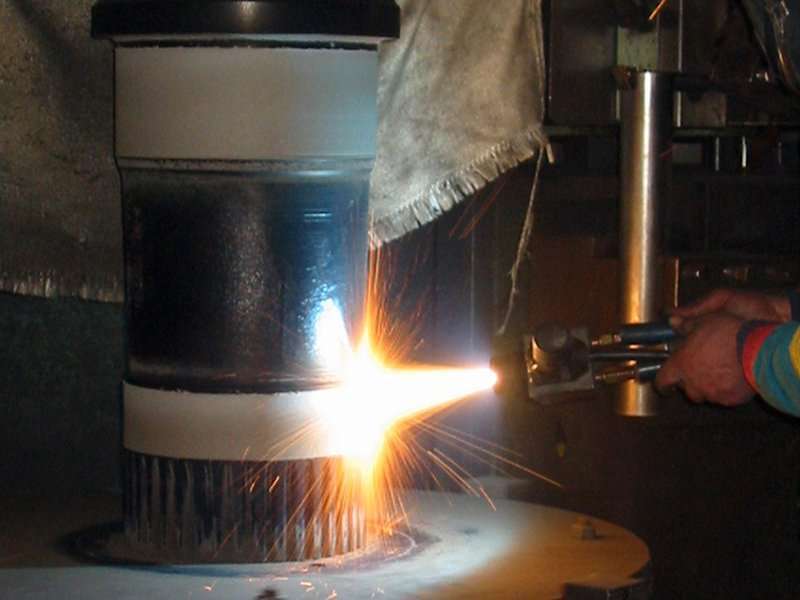
HIGH VELOCITY OXYGEN FUEL (HVOF)
BLASTING
ARC SPRAYING
PLASMA SPRAYING
HIGH VELOCITY OXYGEN FUEL (HVOF)